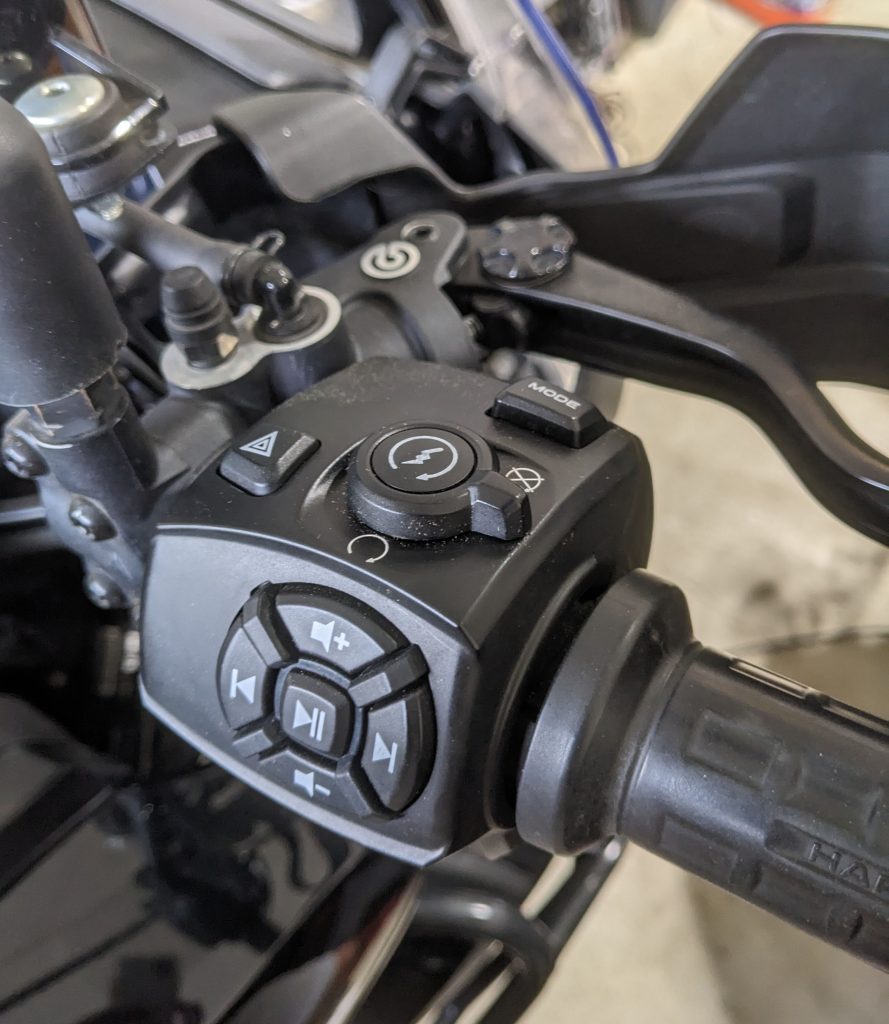
Here it is. The bane to my existence.
It all started with my ride to Colorado last year. At first, the problems were minor, but over time they became harder to ignore. Eventually, every time I looked at my bike, I found myself feeling a little more disdain toward it.
You see, my bike is a 2022 Pan America. And if you know anything about the early-model Pan Ams, you know the electronics were just a few of the gremlins they possessed but it was just others bikes with these annoyances, not mine.
At least, that’s what I kept telling myself.
The first little issue showed up when the key fob decided it wasn’t interested in cooperating. The bike wouldn’t recognize it. My first thought was pretty simple: “Well, the battery in the fob must be going bad.” Easy enough, right? Change the battery and carry on. So I thought I would use the second fob hanging in the cabinet to test my theory….
Except… it wasn’t the batteries.
And as I would eventually learn, this was going to become a recurring theme with this motorcycle. What started as an occasional little annoyance slowly turned into a collection of “huh, that’s weird” moments—followed by “you’ve got to be kidding me” moments.
My week-long ride in Colorado started under skies so blue they looked straight out of a high-contrast YouTube video—until they weren’t. With about two days of riding left, the blue turned to gray, and the skies opened up to unleash a whole lot of unpleasantries. We never slowed in our journey and in spite of the weather, we all appreciated our journey and took the rain with a grain of salt.
I got back at the end of September, and my bike ended up sitting in the garage until spring. Before I knew it, fall had quietly slipped right into winter and winter slipped into spring.
Spring is Here.. Time to Ride.. So I thought
Spring has sprung, days are getting longer and warmer and its time to get the bike out for its initial New Year ride. Until it wasn’t. Gear on and ready to take a ride I was greeted with the solid yellow battery icon on my dash TFT display.
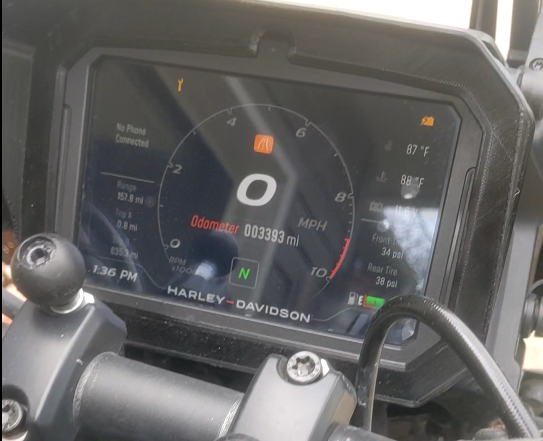
Not to worry though, I’m still fresh to ride so off came the gear and out comes my trusty volt meter I named Jed. It didn’t take long to discover the problem. I pulled the top connector off that leads to the alternator and with Jed at my side, I began to probe the wires. Good news, all three wires tested with the correct .2 – .5 Ohms so the next logical step is to start the bike and check for AC voltage. The manual calls for 16-19 VAC per 1000 RPM and with the bike idling around 1500 RPM, my reading were spot on.
Here is a less know bit of info. My next step is to always pull one lead from the connector and touch it to ground while the bike is idling. What this dynamic check is doing is it reads the surface voltage running around on the engine case. Since electricity takes the least path of resistance, pulling one lead and probing ground should result in roughly half of the initial reading or less. Two wires equal X so one wire connected and the other to ground should read about half. I’ve never seen the voltage exactly half as the engine idle speed jumps around but you’ll get a good sense of the integrity of the alternator this way. Anything higher that 1/2 AC voltage is an indicator that the alternator is pushing voltage to ground and not out to the regulator as ground is the least path of resistance and the regulator is a high resistance. This can happen even with good Ohm readings because with the engine off, or static, the alternator is not having to provide a charge so your Ohm readings will be close to what the spec is.
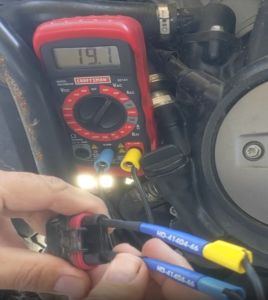
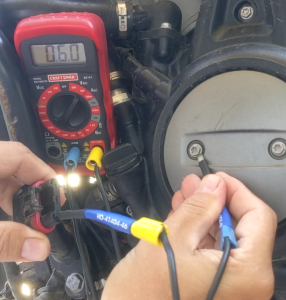
So after those test came back good I pulled the connector at the bottom of the regulator that feeds the main body of the bikes electronics and was met with a rusty colored surface with water dripping from the terminal. Looking at the images below, we can see that the top terminal blade has rusted completely off and the remaining part of the spade connector was still in the terminal connector. At that moment, my start switch hasn’t raised it’s ugly head.
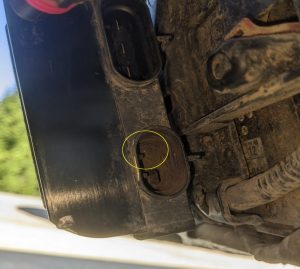
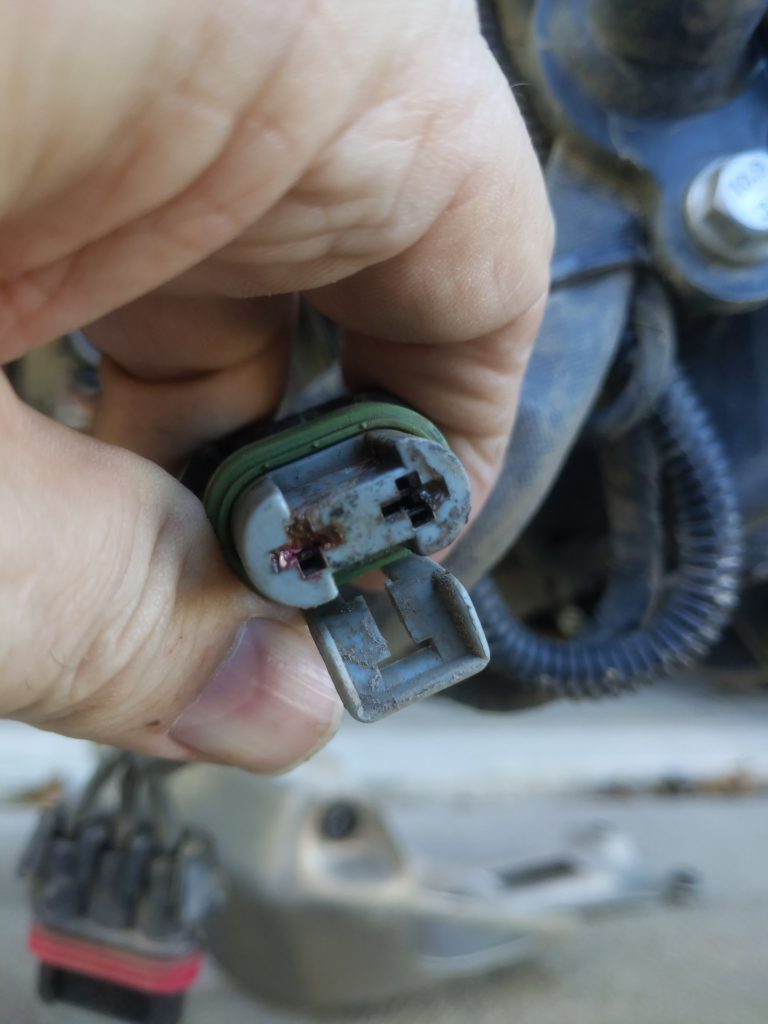
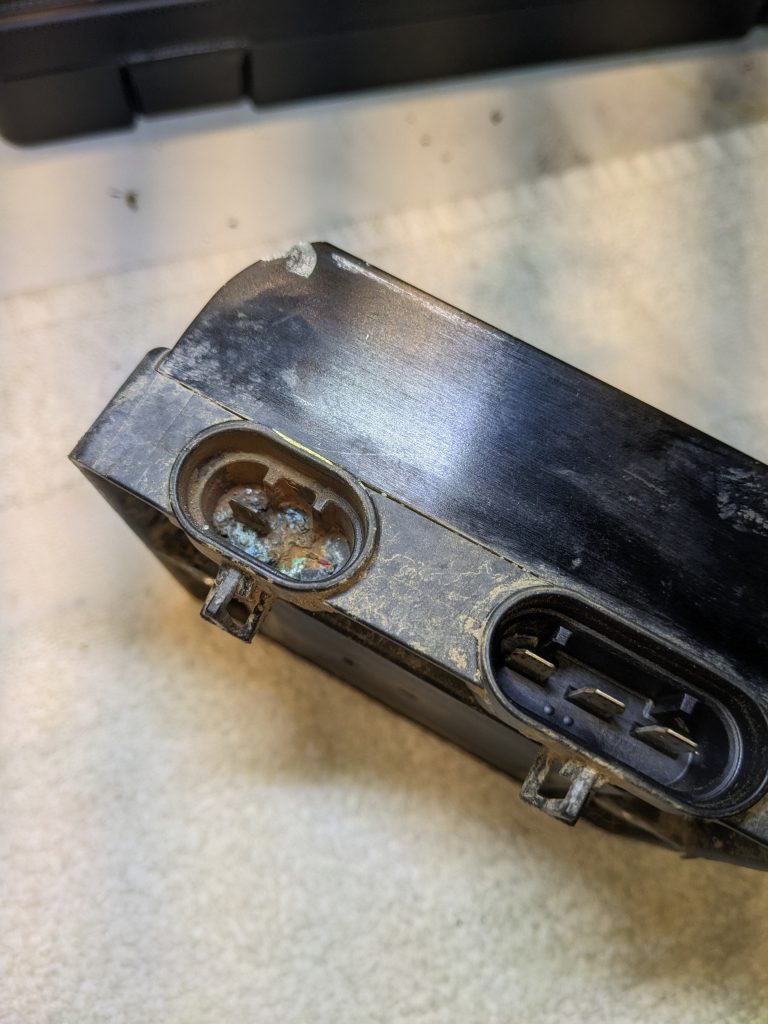
So long story short, I called my local Harley-Davidson dealers to purchase one and you guessed it, they did not have one in stock. I had to prepay of course and after a “set down to catch my breath” moment upon hearing the price, I ordered the part and eagerly awaited.
After a straight forward install of two mounting bolts and reinserting two connectors that had a generous amount of electrical dielectric grease on them, we were back at full charge and I reaffirmed this with Jed.
So I went to the diagnostic screen on the bike and cleared the codes and thought all was good. Charging was correct but that pesky absent presence of the fob continued and the Yellow Triangle starting to appear. I initially thought with the positive connector being broken off at the regulator it was limiting current to the necessary component that the bike needed to recognize the fob. I checked the diagnostic screen again and I still have that pesky and always lingering RHMC diagnostic code B116609C. After a few more repeated attempts to clear codes to see if they reappeared, they did so it was time to replace the module.
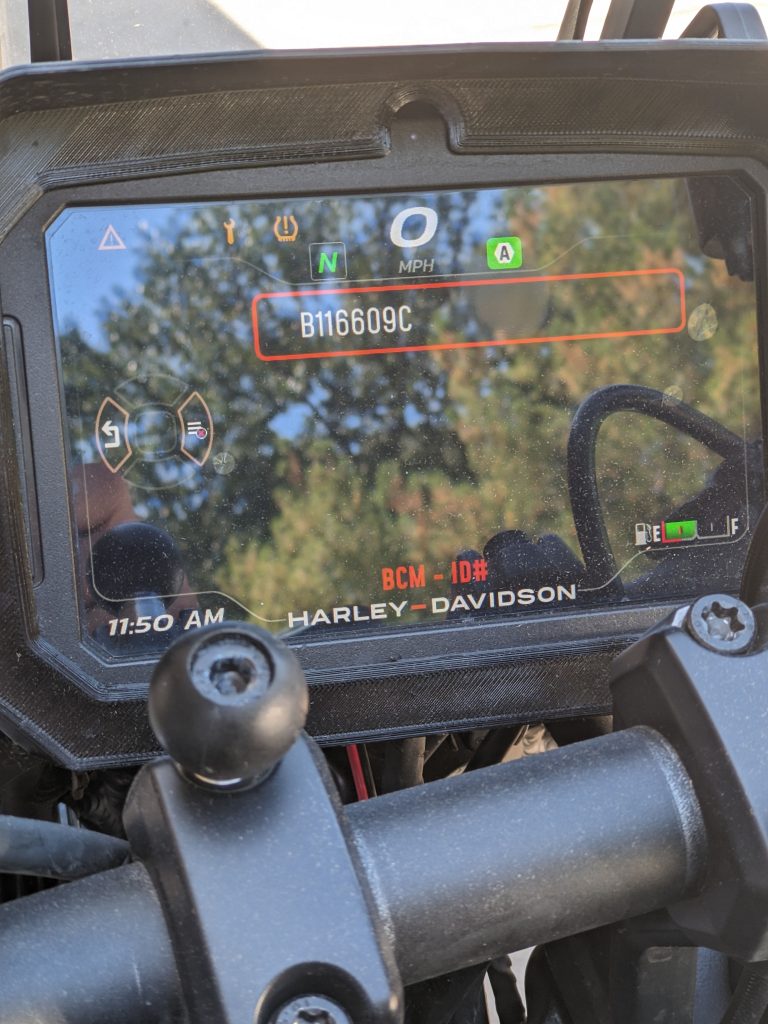
So Lets Address the RHCM..
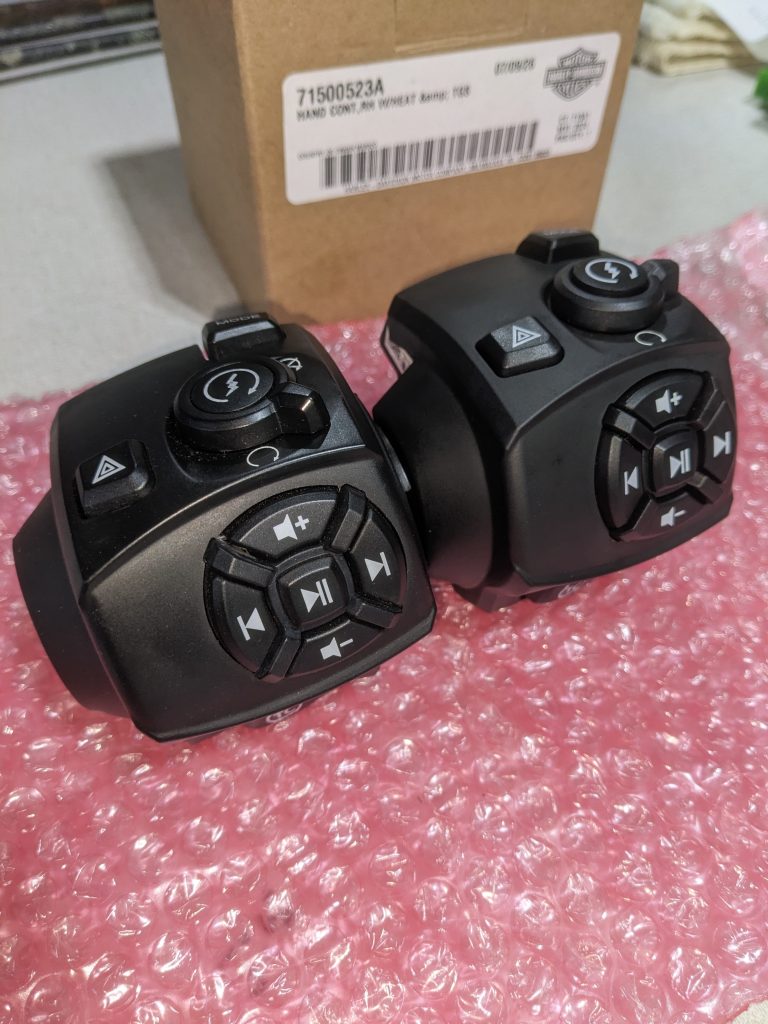
Here are the old original switch on the left and new/updated switch on the right. Only physical difference I could see is that the new switch’s start button is slightly raised above the on-off switch. The new switch does have a smoother feel also when switching on or off.
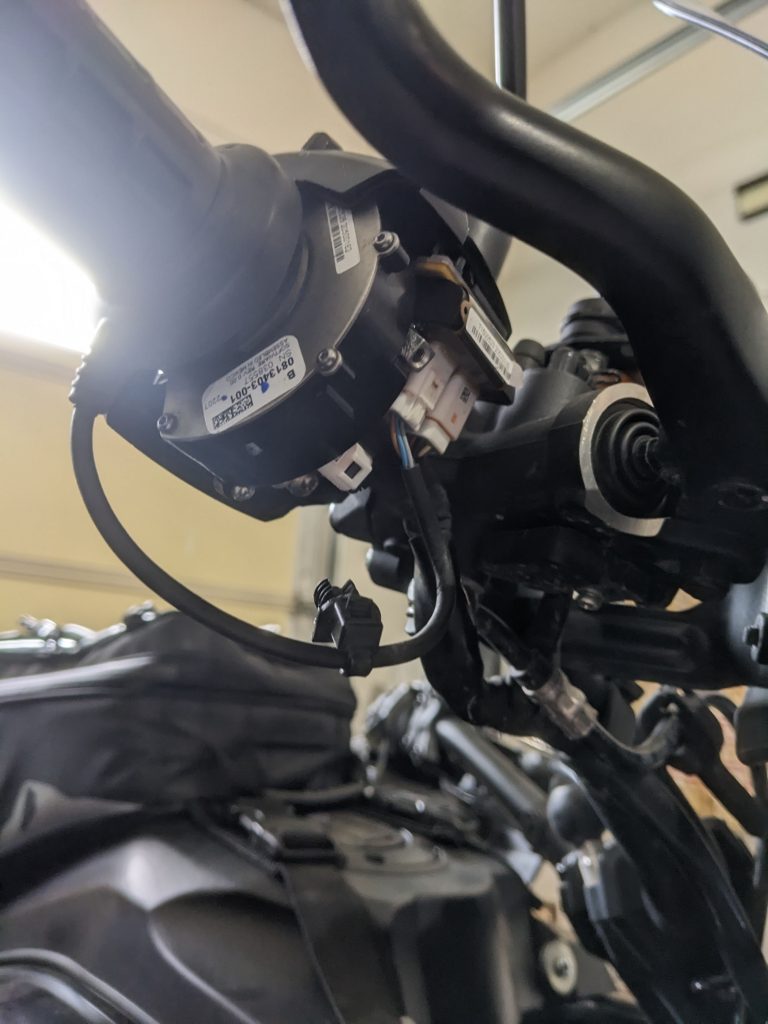
Removed the lower switch housing..
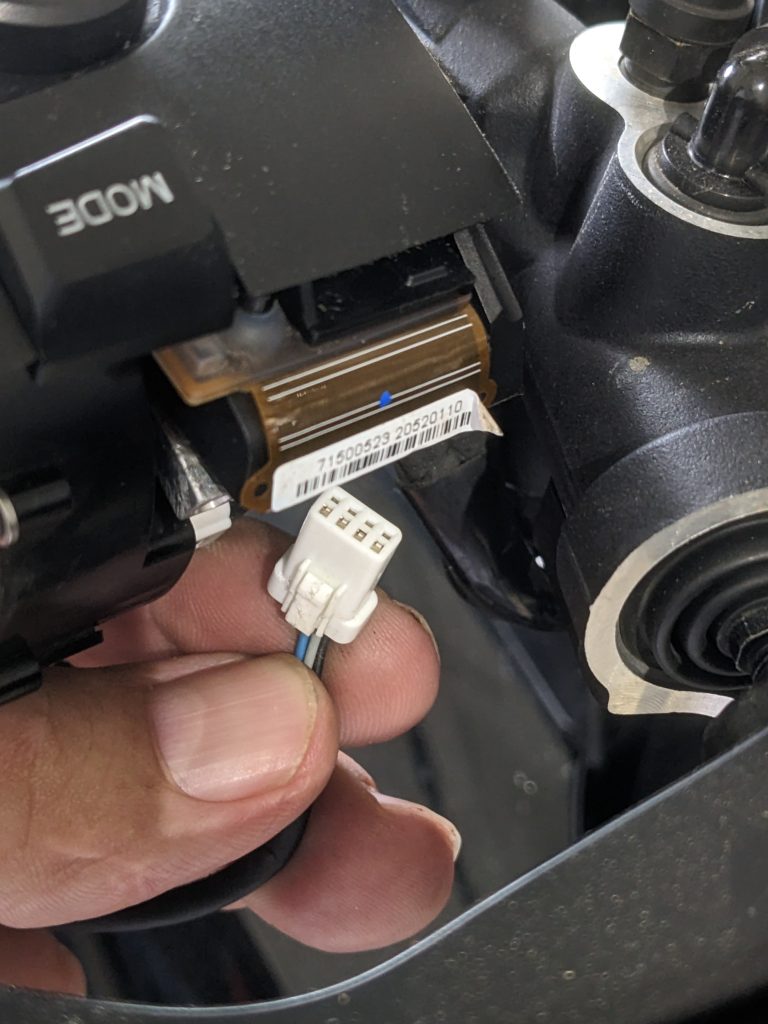
Disconnected the heated hand grip..
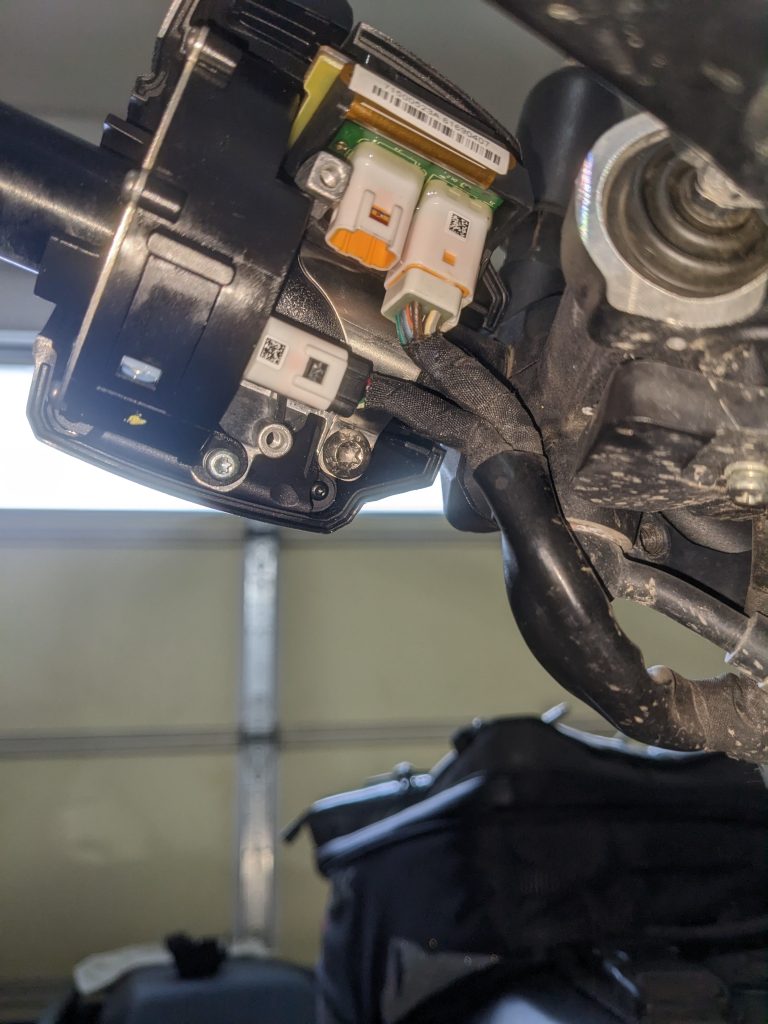
Next is to remove the remaining two group of wires. The one running horizontal is the twist grip sensor and the one running vertical connects to the top switch circuitry.
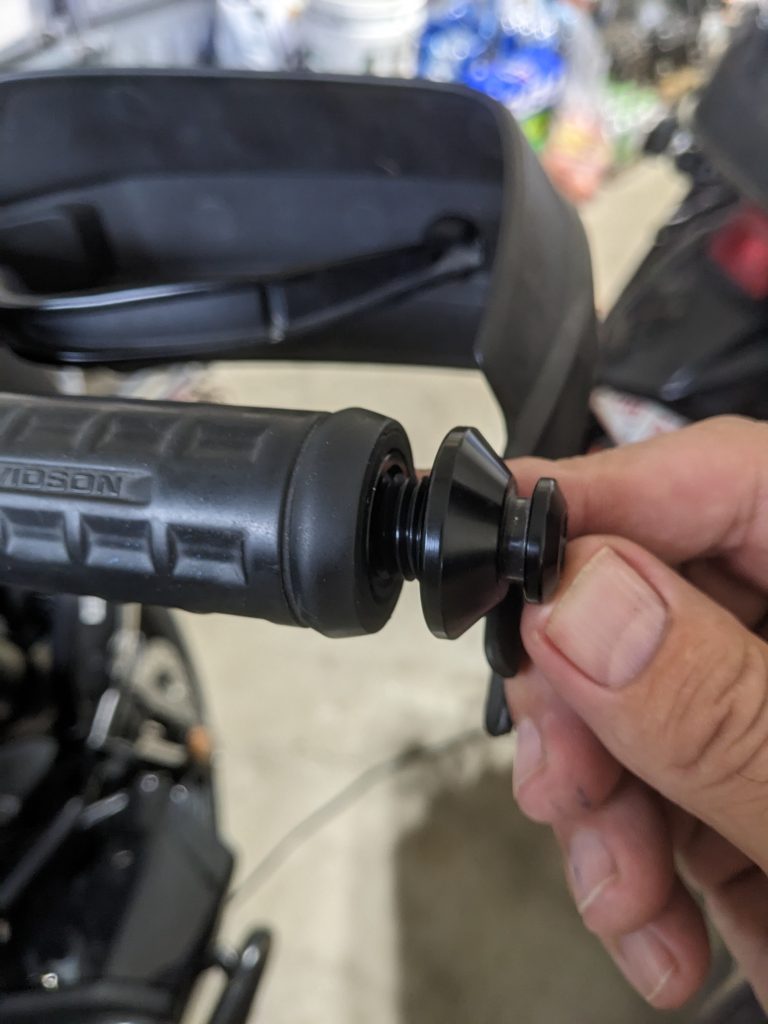
Remove the end cap on the bar and the switch housing and twist grip slide straight off.
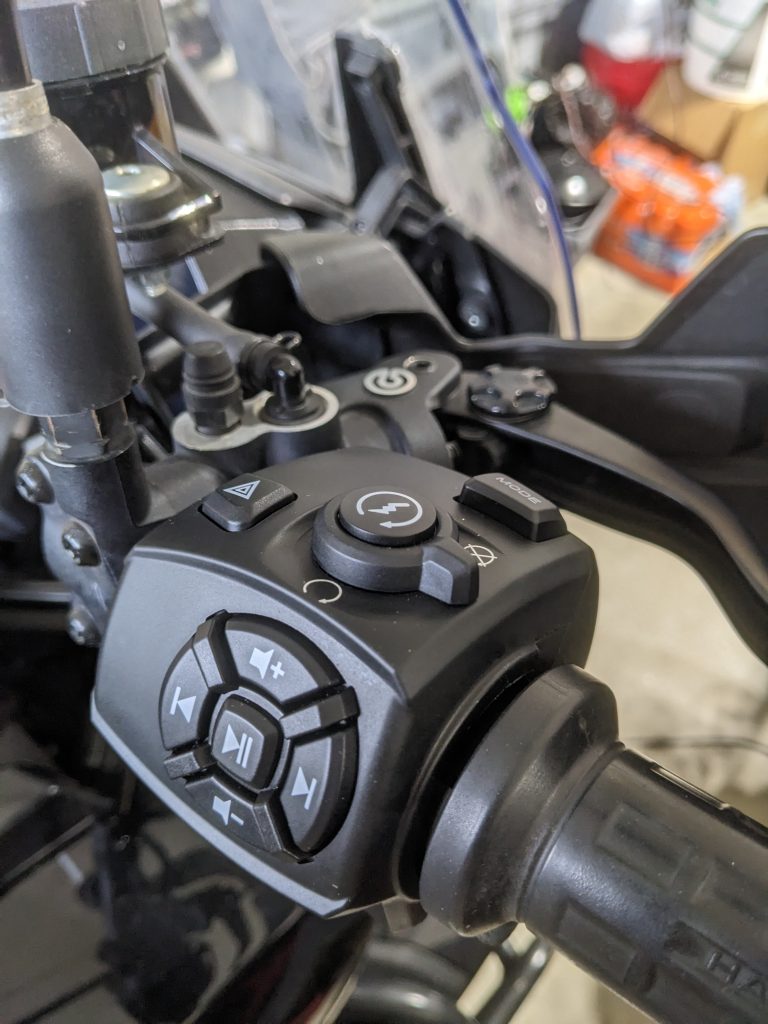
So I didn’t take more pics as it was as simple as off with the old and on with the new, reconnected the wires and reinstalled the lower housing.
Only thing remains is that I will have to take the bike to the dealer and have the RHCM paired with the BCM as the heated grip is showing inactive.
So I am happy to report that after several rides after these two repairs the bike still remains code free for these previous issues…..Keeping the fingers crossed….